






Your skin has a personality

Sena Kim
My SBTI
Hyper-Personalized Skincare Platform via Data Intelligence
OverView
My SBTI is a hyper-personalized skincare platform that transforms complex dermatological diagnosis into an intuitive experience by defining skin types through the 'SBTI' framework. By analyzing individual skin data across four key axes—Oil, Sensitivity, Concern, and Hydration—we replace subjective guesswork with objective, visualized metrics. This digital diagnosis seamlessly connects to a smart IoT device that dispenses customized ampoule cartridges, providing a complete solution that bridges the gap between biological needs and daily care.
Background & Problem Definition
The Influencer Trap
Skincare consumption is largely driven by social hype, not biology. Consumers often rely on influencers or viral trends rather than their own skin data. This disconnect leads to a cycle of purchasing products that are popular but biologically incompatible.
The Unknown Skin Identity
Most people misunderstand their own skin. They rely on vague feelings like 'dry' or 'oily' without knowing their skin's true 'Personality'—its specific barrier strength, sensitivity triggers, and aging patterns. This lack of self-knowledge is the root cause of ineffective care."
The Consequence - Costly Trial & Error
This lack of objective guidance forces consumers into a costly game of trial and error, resulting in wasted money, abandoned products, and persistent skin troubles

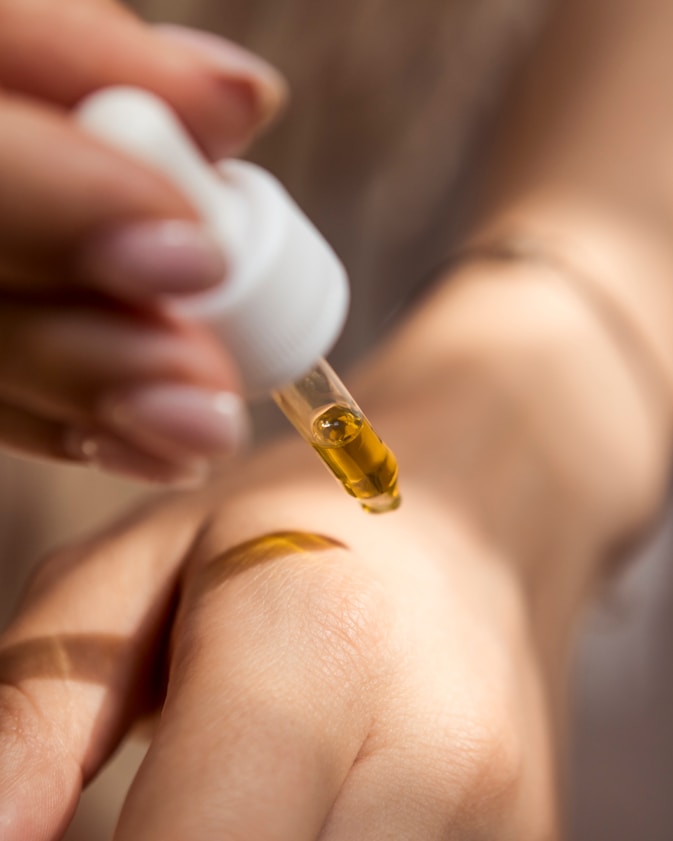
Initial Hypothesis & Prototype
The Academic Approach
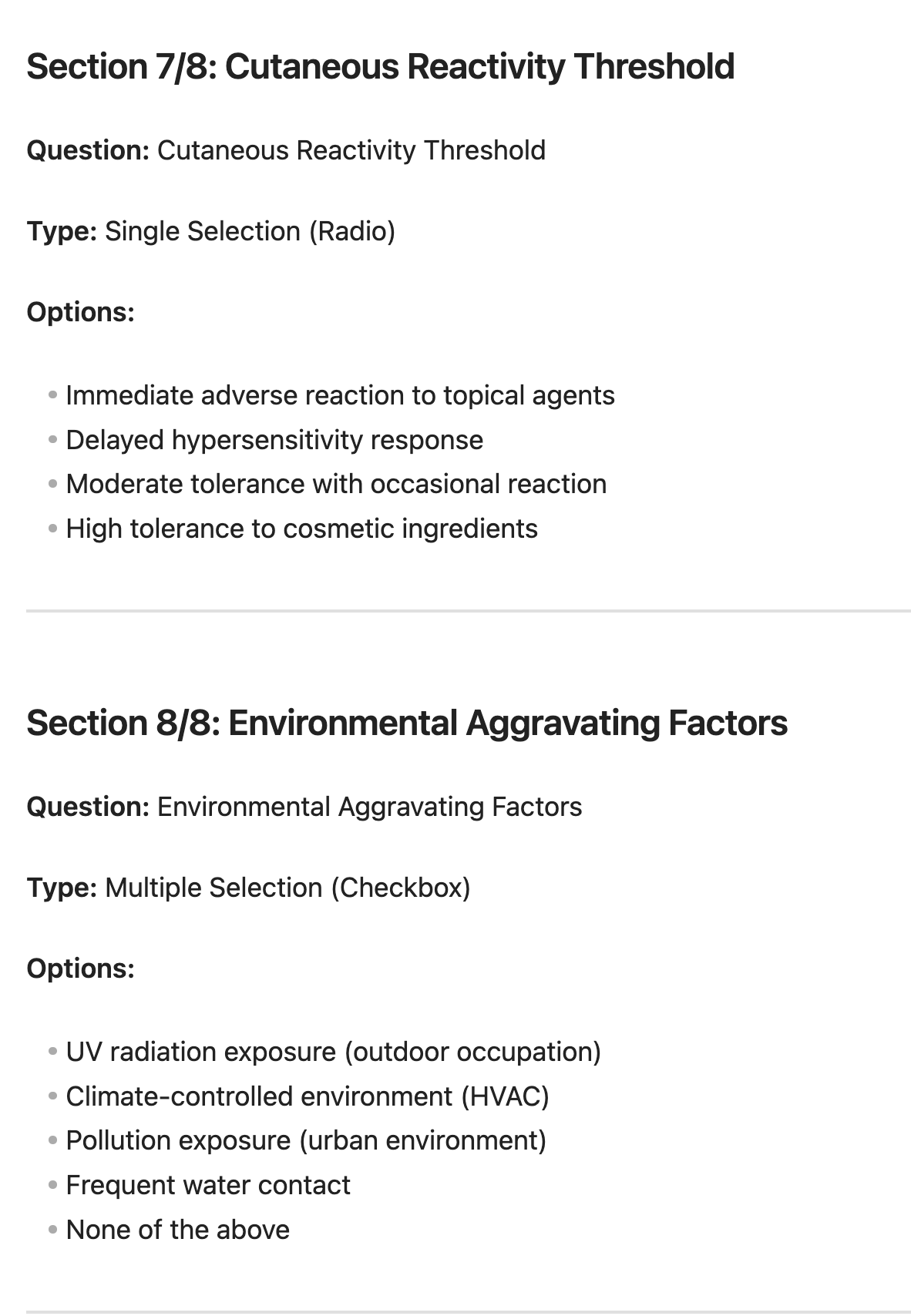
Initially, I designed a standard dermatological questionnaire to categorize users and provide management tips. My hypothesis was that users simply wanted accurate, professional medical information
From Concealing to Curing
Previous Attempt
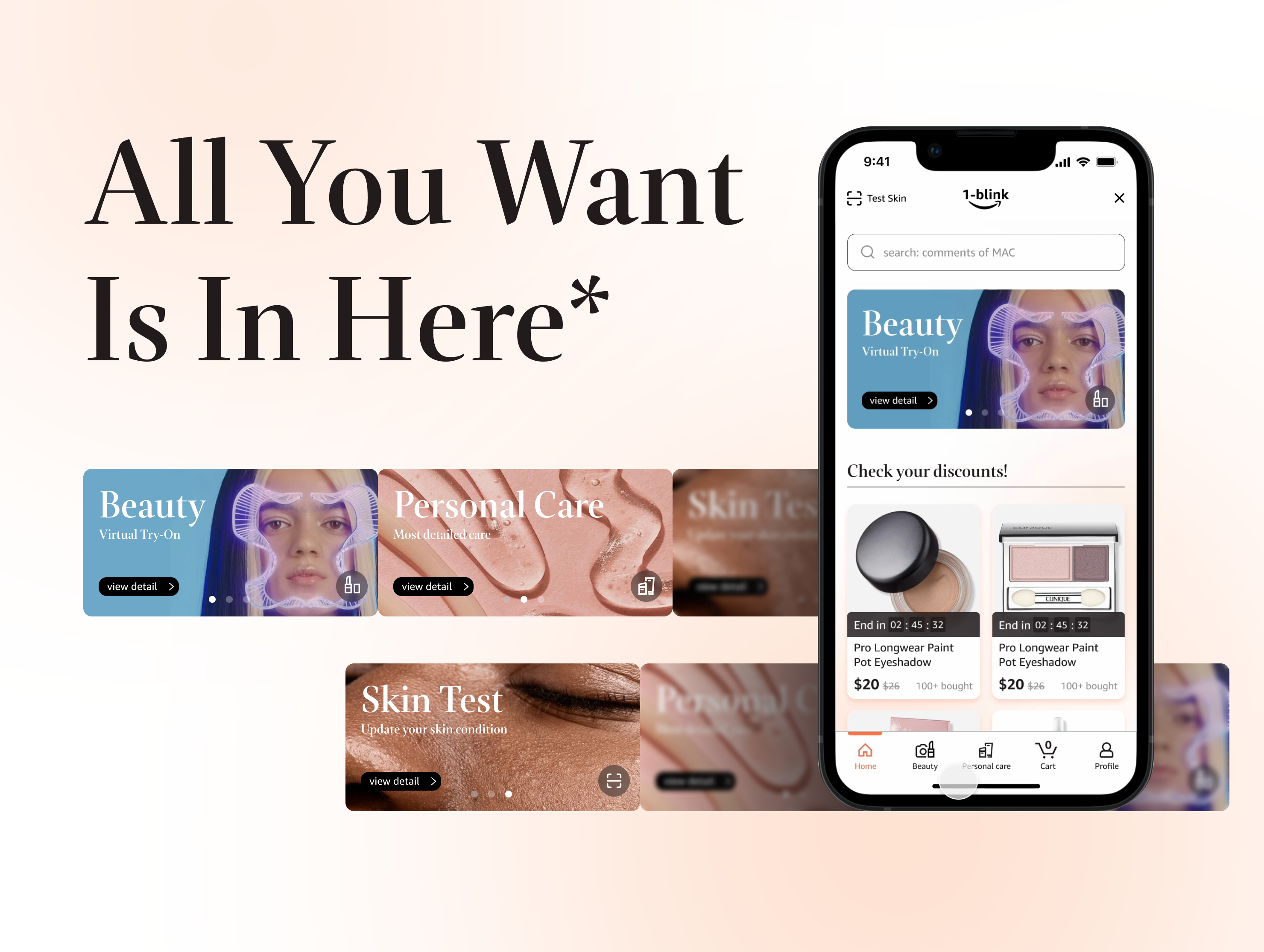
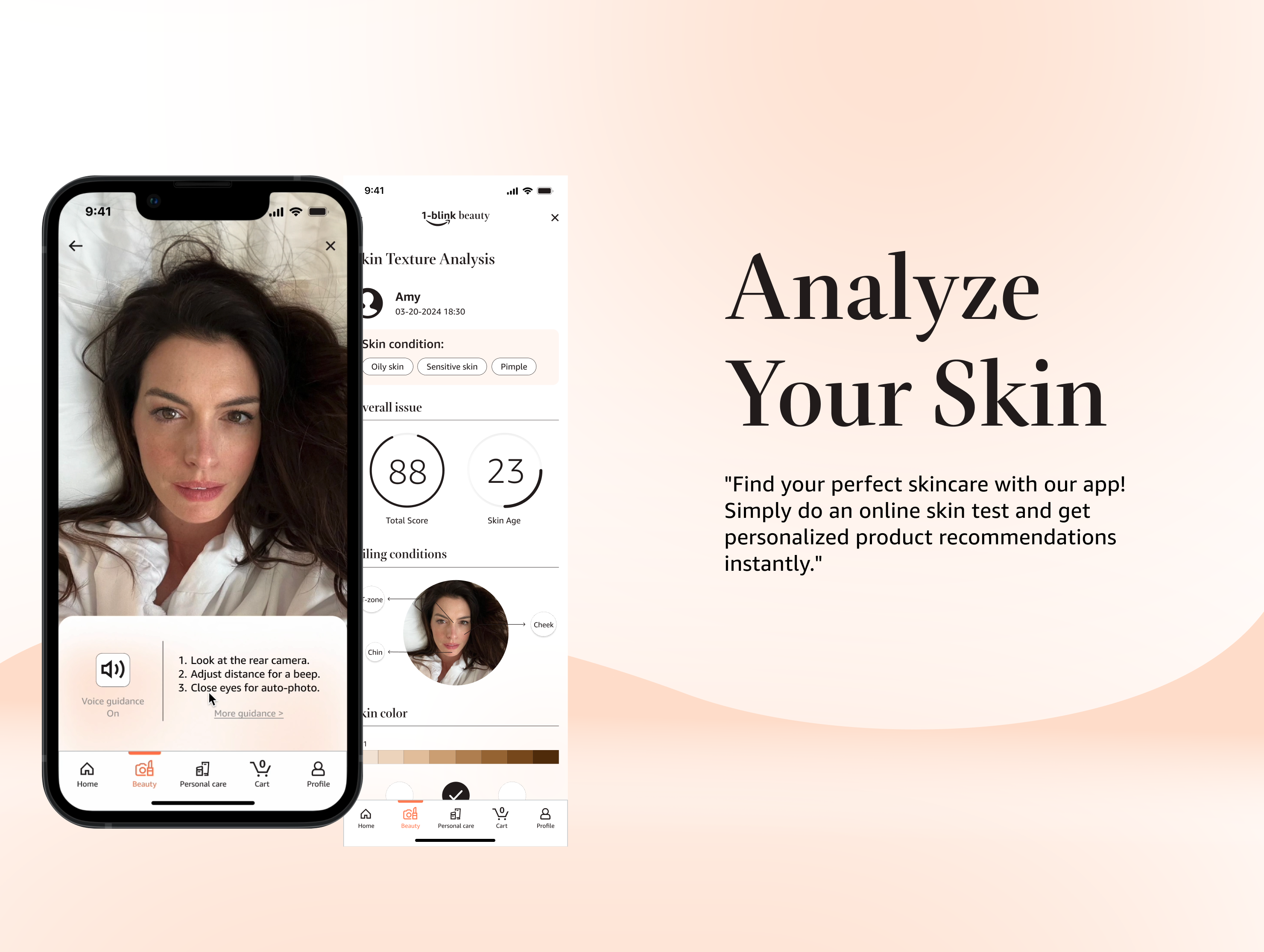
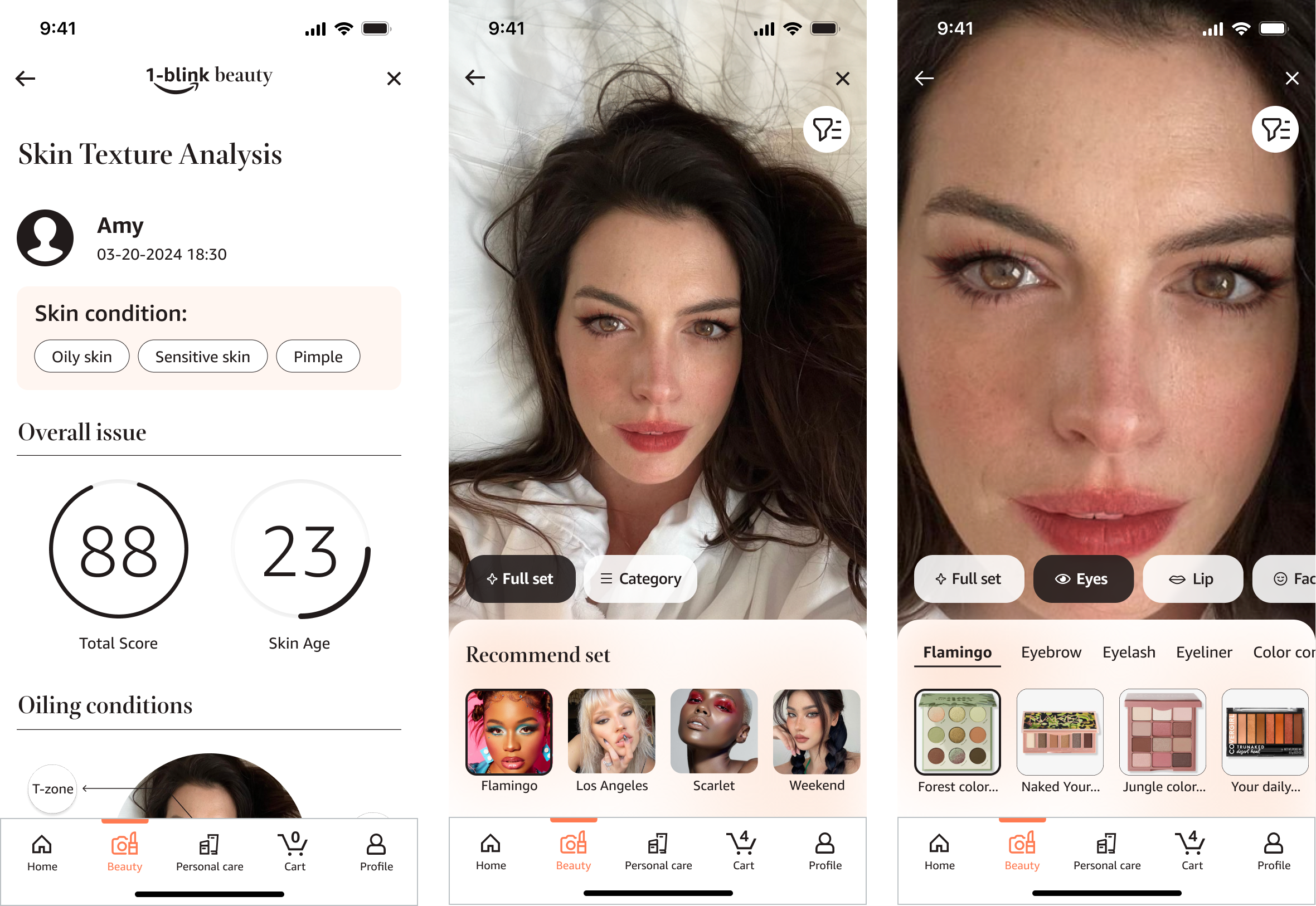
In my previous 'Amazon AR Makeup' project, I focused on finding the right colors to cover skin imperfections. It was a successful visual solution, but it had a limitation: Makeup is only temporary.
The Pivot Point
I realized that users didn't just want to hide their acne or dryness—they wanted to fix it. The best foundation is healthy skin itself."
This Project
This realization led to My SBTI. I shifted my design focus from 'Surface Decoration' to 'Fundamental Care,' using data to provide a physical cure via custom cartridges and IoT masks
Section: Strategic Reframing
Step 1. Initial Strategy & Friction Analysis
Initial Concept: "The AI Dermatologist"
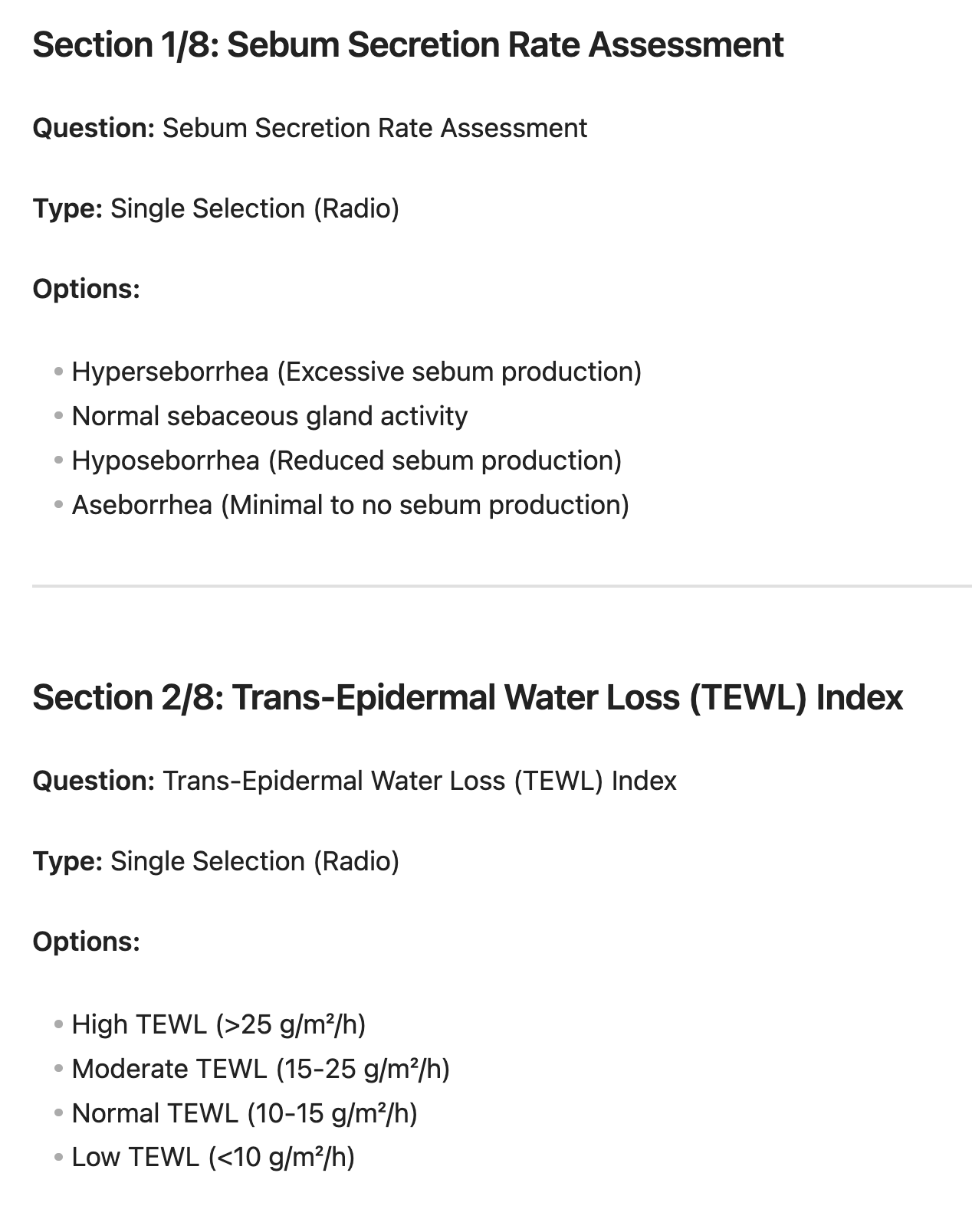
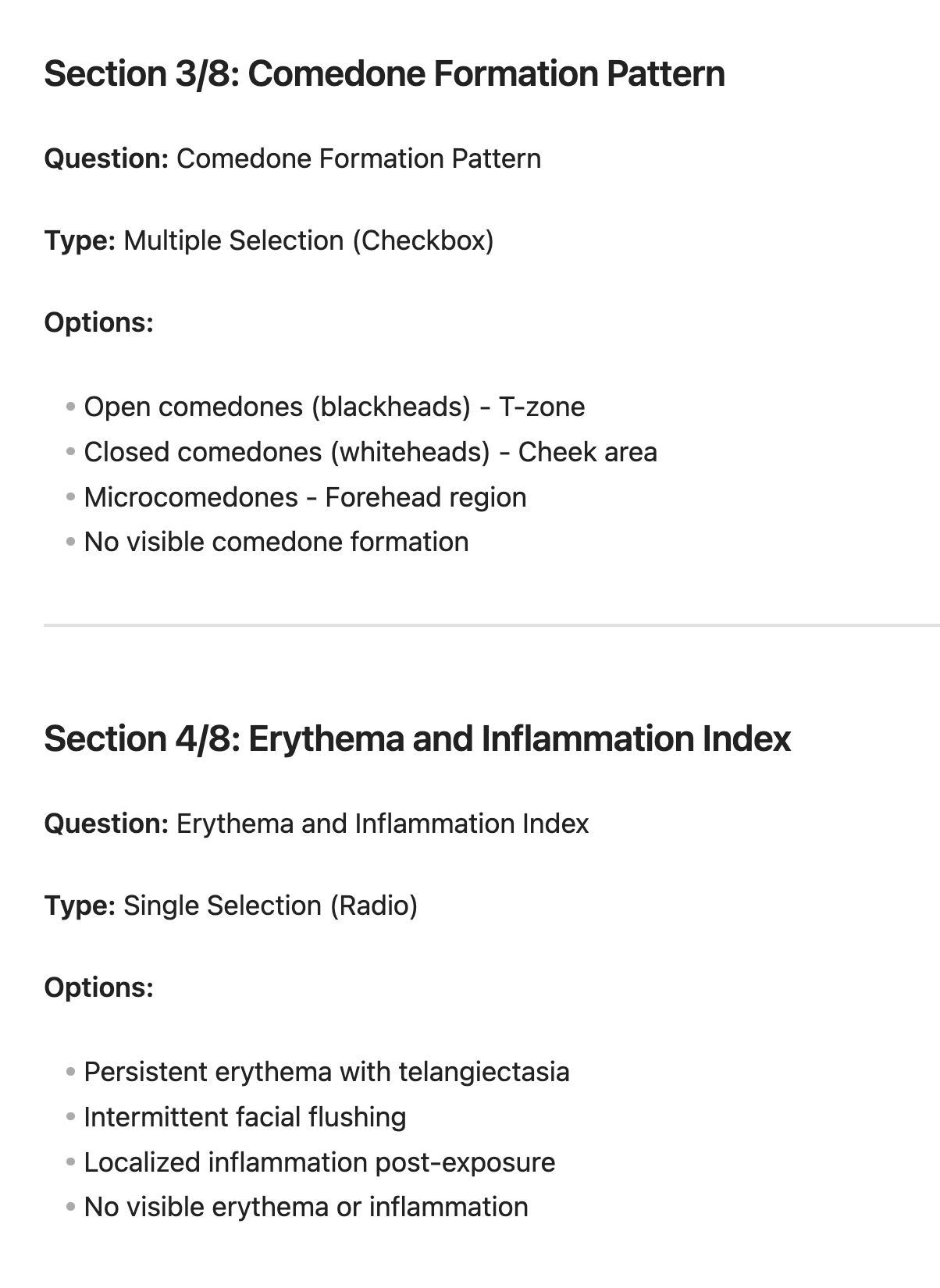
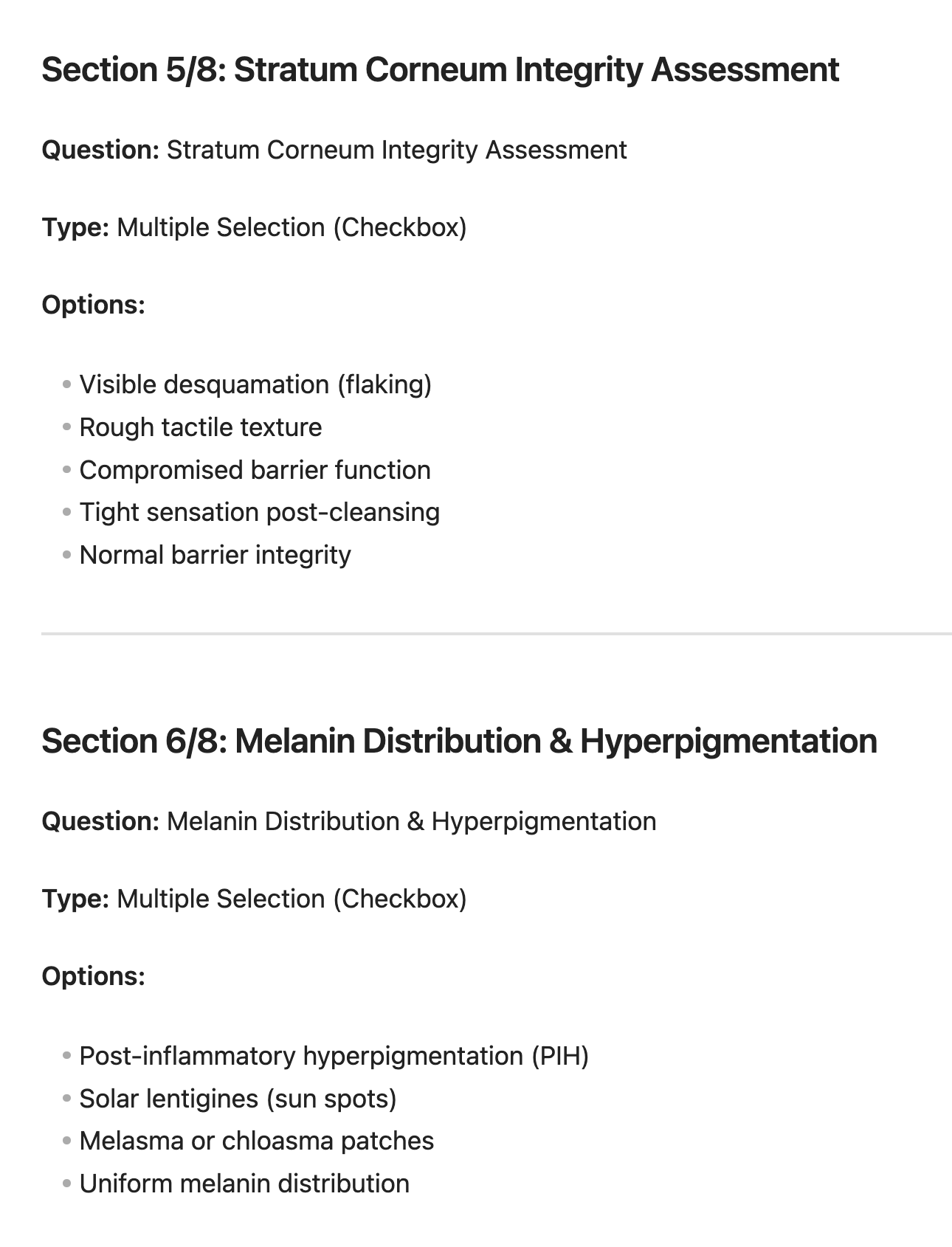
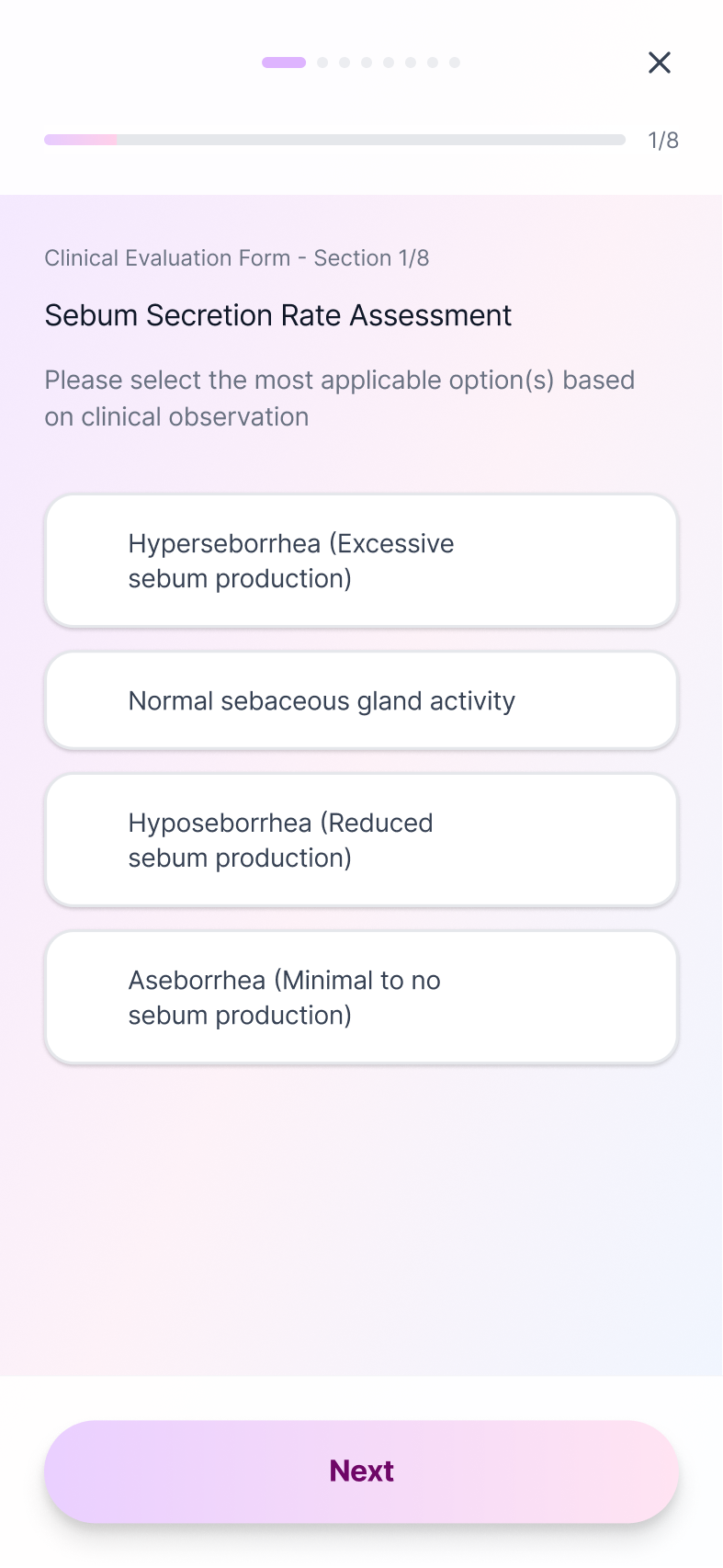
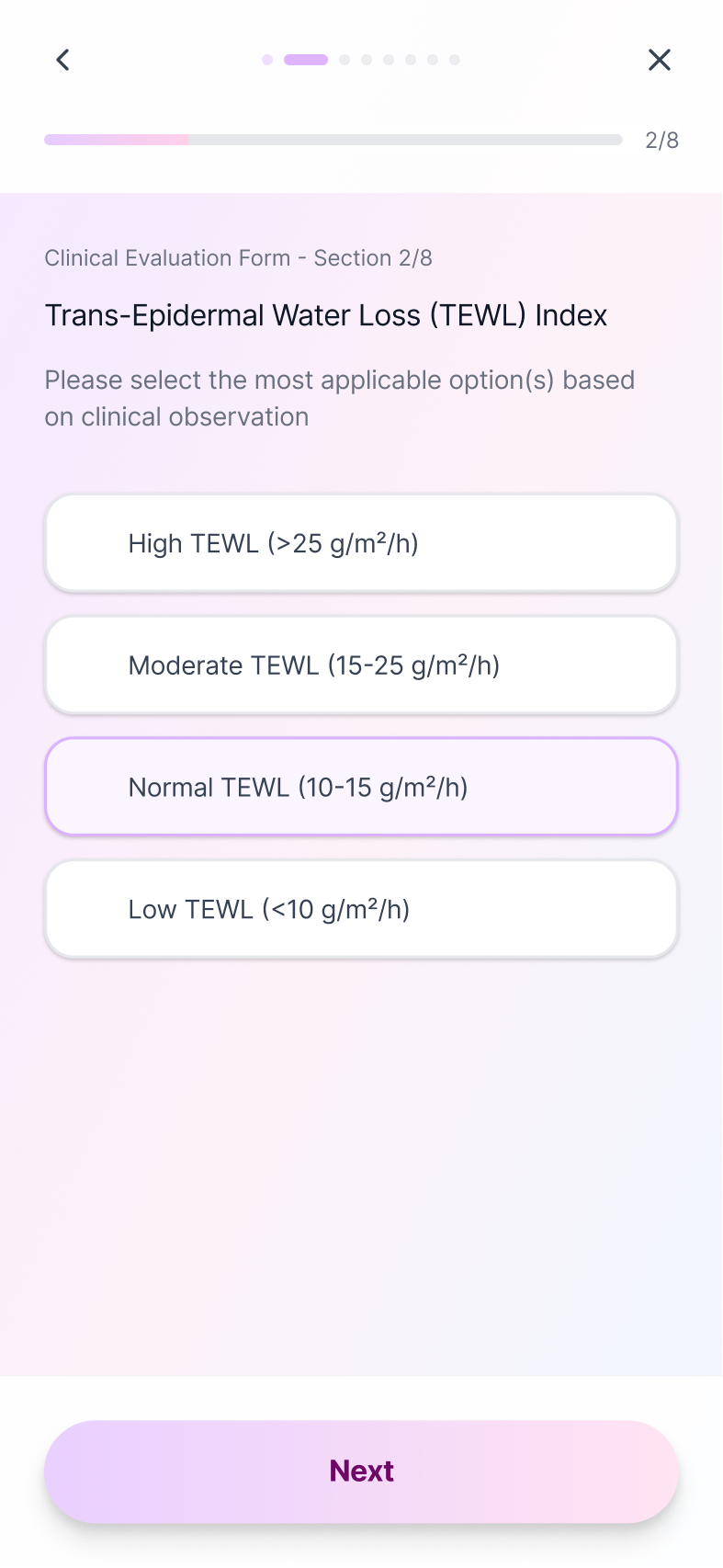
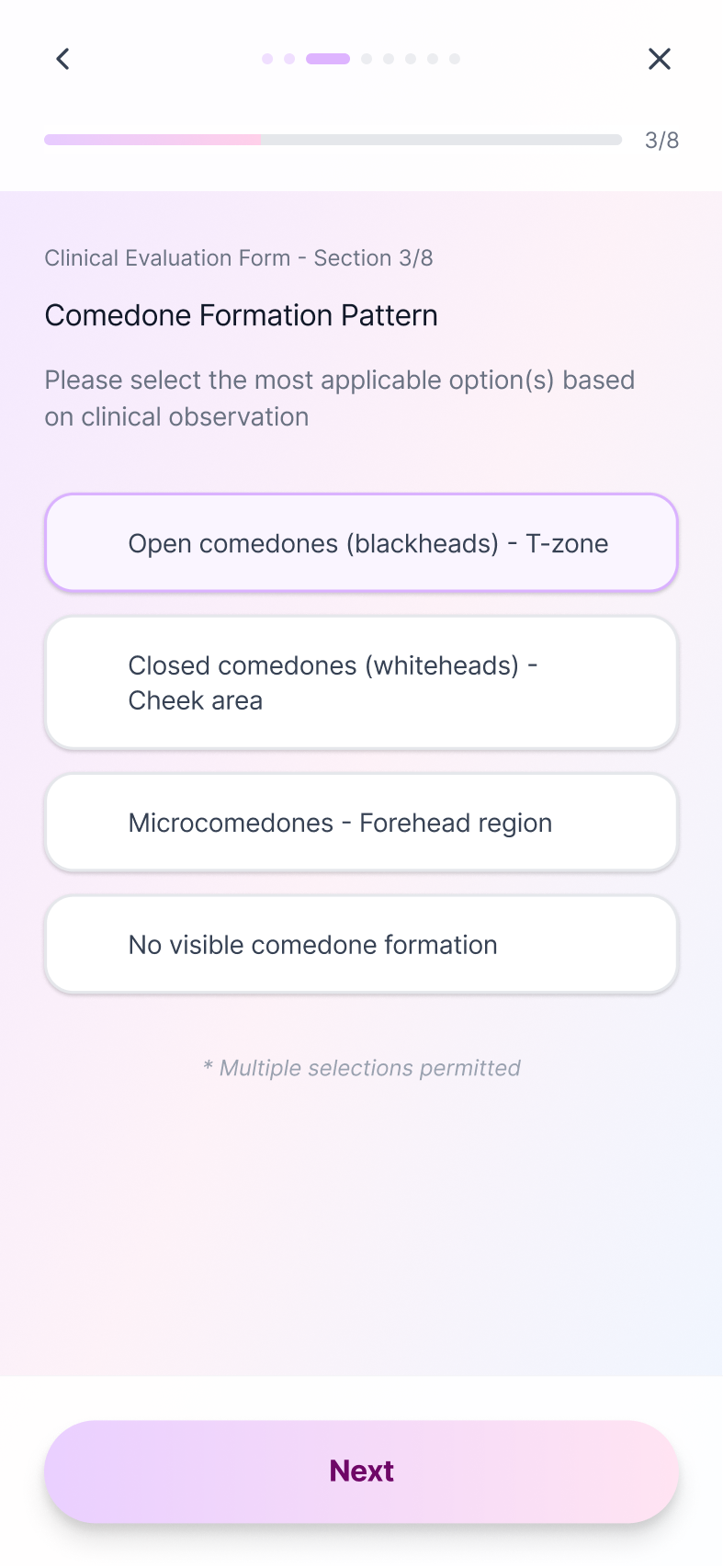
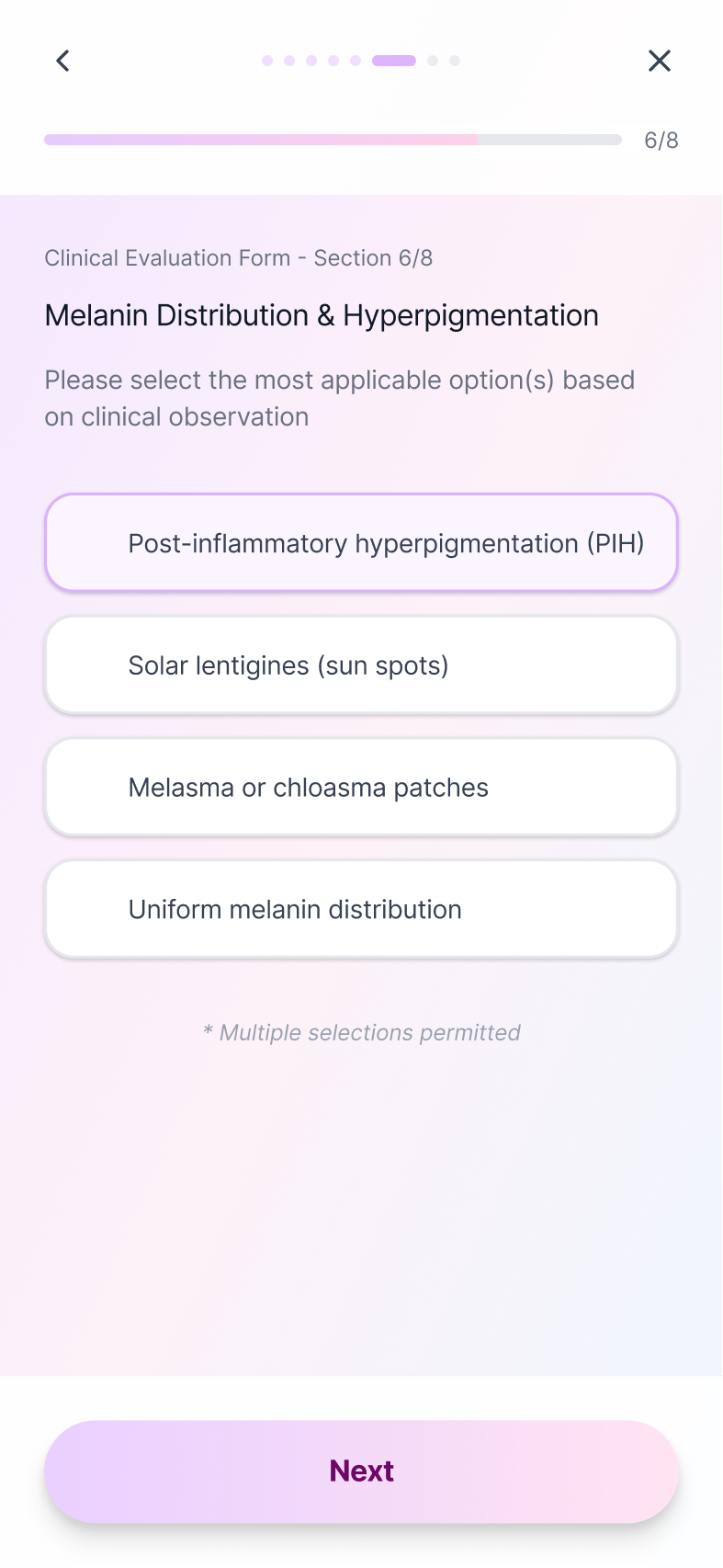
Initially, I designed the service as a professional "Diagnostic Tool," prioritizing medical credibility and precise metrics.
By analyzing the "As-Is" user journey, I identified a critical drop-off point during onboarding. The problem was twofold
Visual Boredom
The interface mimicked a sterile medical questionnaire, utilizing rigid text-based checklists and radio buttons. This lack of visual engagement made the process feel like a chore.
Cognitive Load
The use of technical jargon (e.g., "Sebum Secretion Rate") combined with this hospital-chart-like UI made users feel like patients under examination rather than consumers enjoying a service.
Insight
The visual rigidity and technical complexity created a negative emotional state ('My skin is a problem to be fixed'), drastically reducing the willingness to share results.
Step 2. Market Analysis:
Positioning Map
Finding the Blue Ocean
To find a breakthrough, I mapped existing solutions based on two axes:
Accessibility (Clinical vs. Playful) and Personalization (Generic vs. Hyper-Personalized).
Positioning Map


Our Opportunity
Clinical / Serious
Playful
Dermatology Clinics
High-end Spas
Magazine Quizzes
Basic Product Recs
Personalized
Generic
Quadrant 4 (Clinical & Personalized)
Dermatology clinics and high-end spas. High accuracy but high barrier to entry.
Quadrant 2 (Playful & Generic)
:Magazine quizzes and basic product recommendations. Accessible but lacks data reliability.
Our Opportunity (Quadrant 1)
Playful yet Hyper-Personalized" I identified a gap in the market for a service that is approachable and fun (Playful) like a game, yet delivers precise, data-driven results (Hyper-Personalized).
Step 3. Ideation
The "Identity" Metaphor
Strategy Pivot
From Diagnosis to Identity I utilized an Empathy Map to delve into the user's hidden desires. While users thought, "I want to define my skin type accurately," they also felt, "But I hate difficult terms." Interestingly, their behavior showed a strong affinity for categorizing themselves, saying things like "I'm an Introvert (MBTI 'I').
Medical Diagnosis → Identity Exploration
Based on this, I pivoted the core experience from a rigid medical check-up to an engaging "Identity Exploration" utilizing the familiar MBTI format.
The rationale was simple: People hide their diseases, but they proudly share their "Personality Types" on social media, creating a natural viral loop.
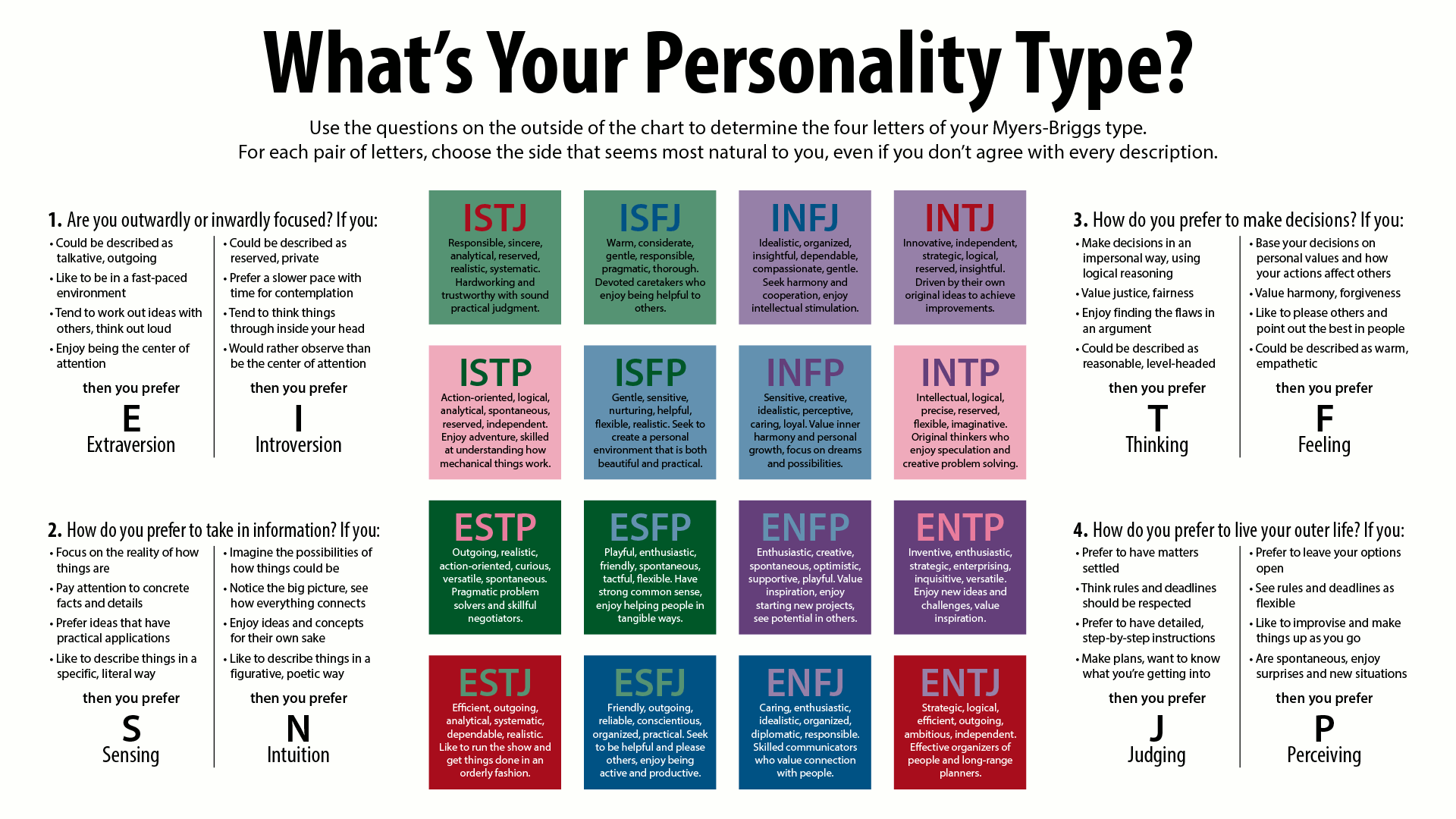
Final Strategy: The SBTI System
The Complete Loop : Diagnose, Visualize, Solve
1. Gamified Diagnosis (The Identity): Defining skin types using the familiar 4-axis letter code (e.g., O-S-A-L) to lower the barrier and encourage sharing.
2. Visualized Data (The Evidence): Visualizing invisible traits like barrier strength and hydration levels into intuitive Radar Charts, building trust through data.
3. Precision Solution (The Cure): Bridging the gap between diagnosis and care by connecting the result directly to a Customized Cartridge via an IoT device.
How Might We
Q1. Gamification
How might we transform complex dermatological diagnosis into an intuitive and engaging experience like a personality test?

Gamified Habit Loop &
SBTI 16 Types
Q2. Visualization
How might we visualize invisible skin attributes—like barrier strength and inner dryness—so users can intuitively grasp their skin's true 'personality'?
Radar Charts &
Character Cards
Q3. Precision
How might we bridge the gap between diagnosis and daily care to provide a precise, error-free product solution without the need for guesswork?
IoT Device &
Ampoule Cartridge
Phase 1. Identity Exploration
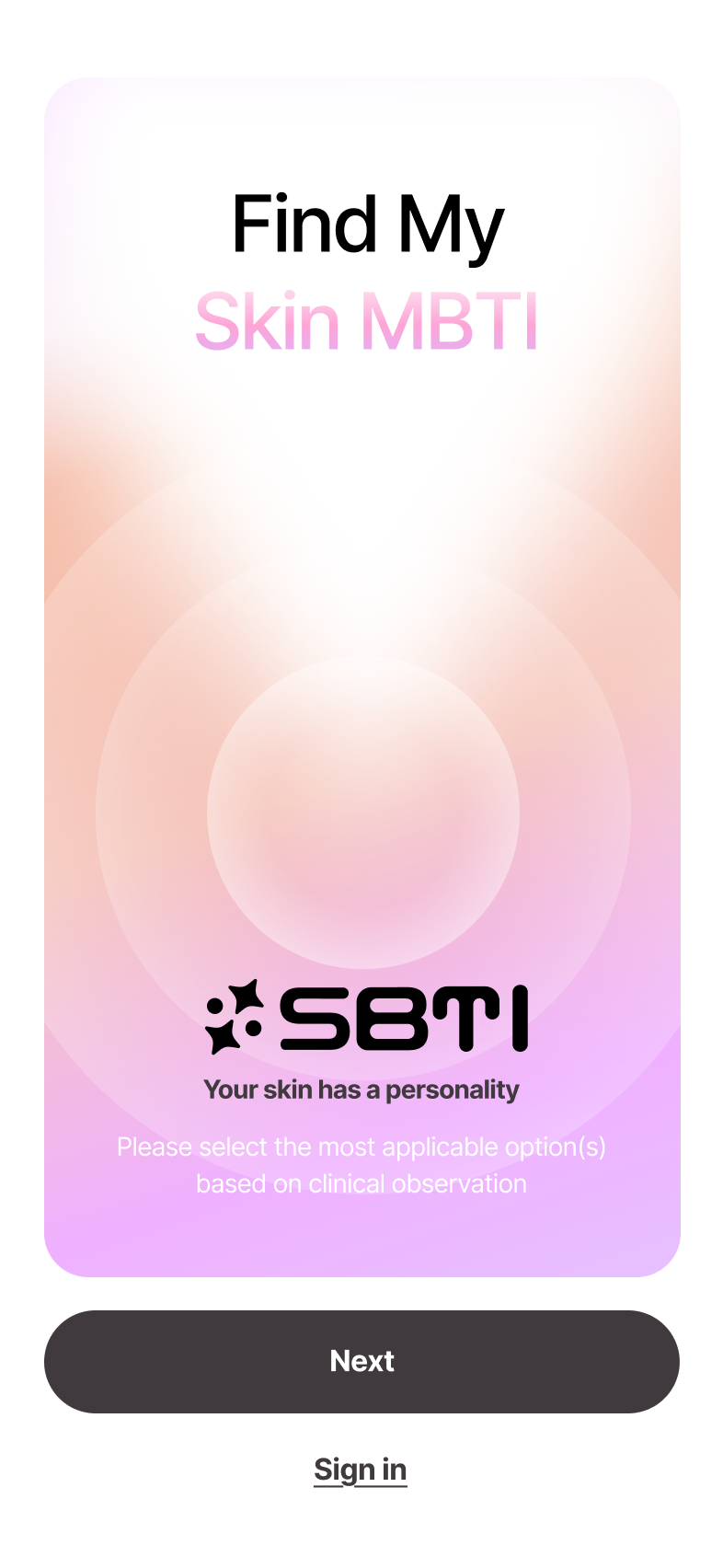
Onboarding
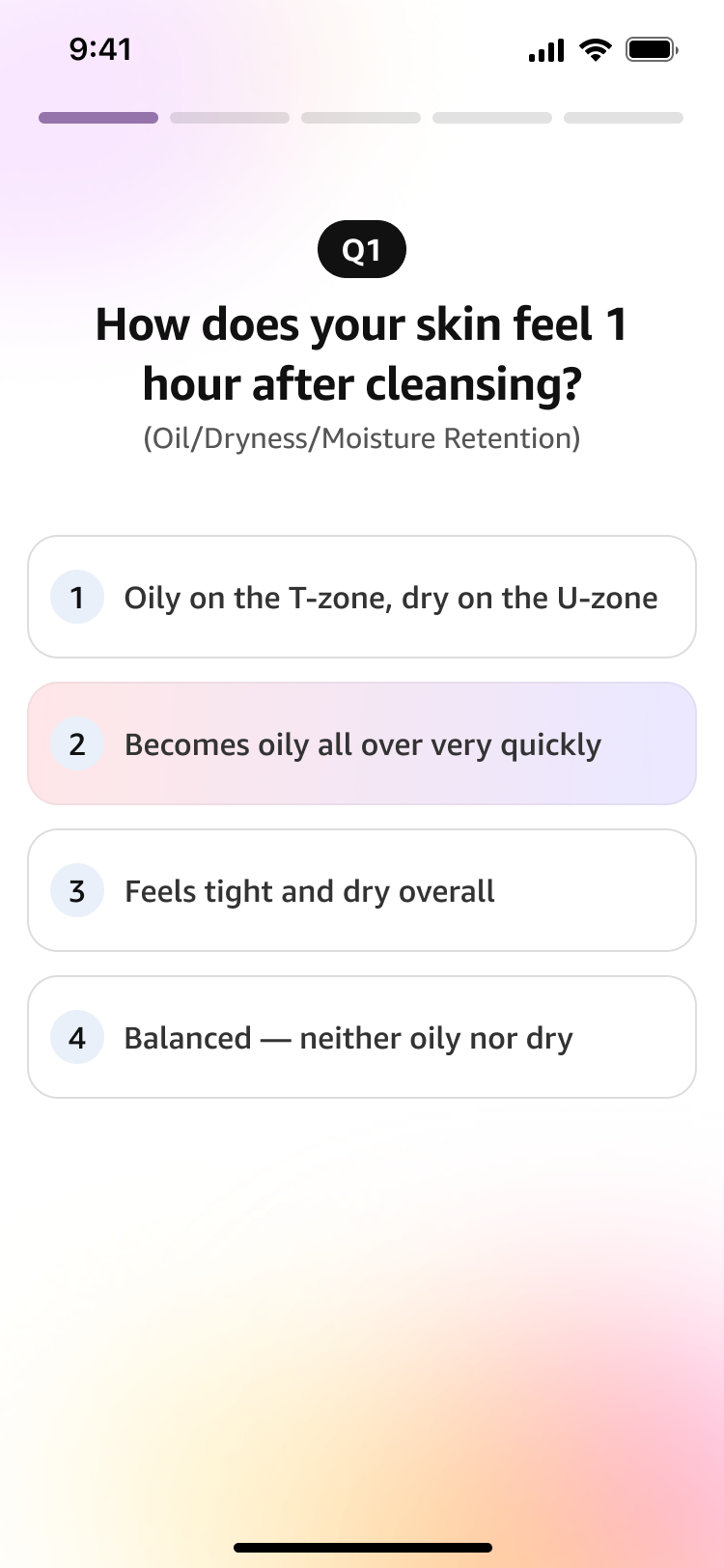
Intuitive Question
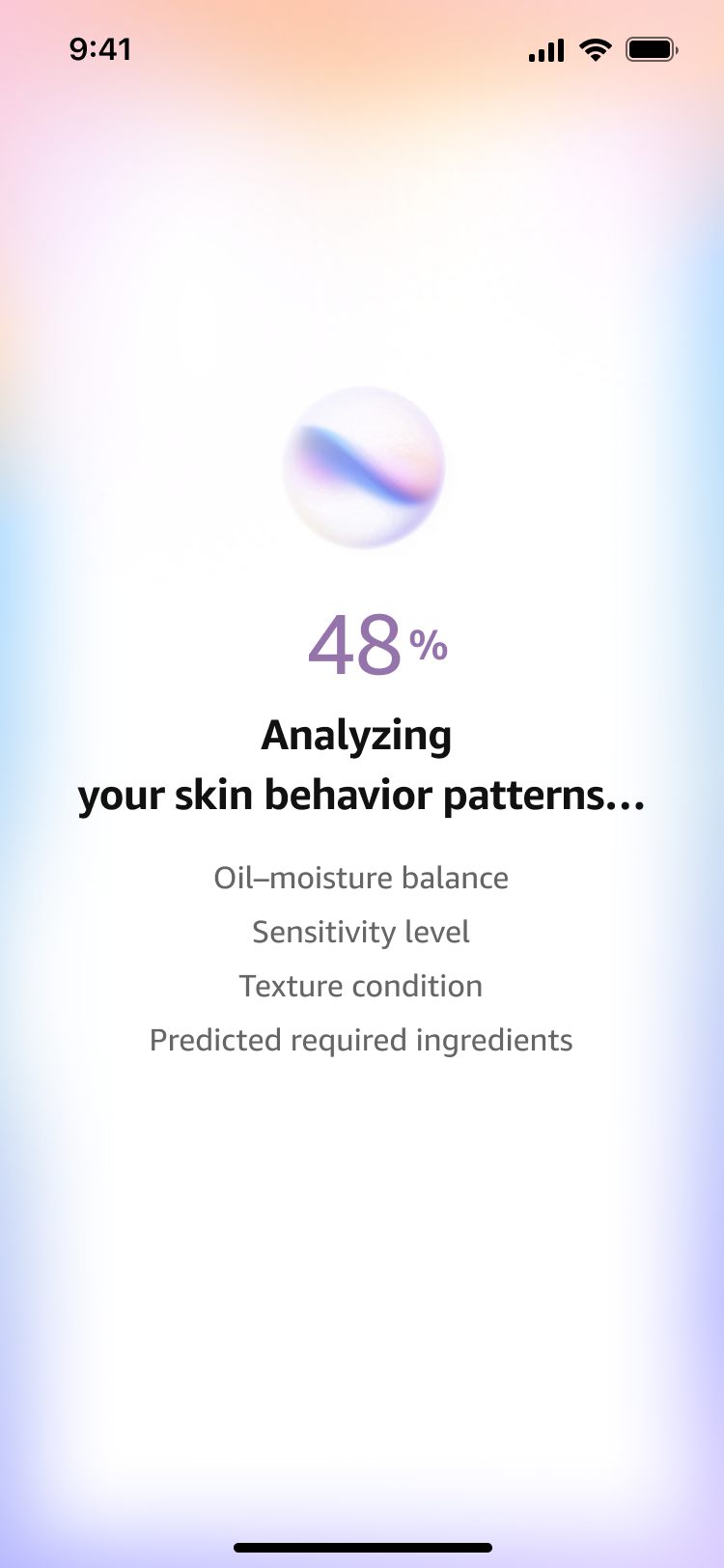
Detailed analysis in progress
Onboarding
"Skin Personality Test." Instead of a "Start Diagnosis" button, the CTA says "Find My Skin MBTI". The copy "Your skin has a personality" triggers social curiosity.
Frictionless UI
"Frictionless UI." To minimize cognitive load, I designed a 'One-Question-Per-Page' layout with large, intuitive 4-choice buttons. No typing, just tapping—completed in 30 seconds.
Phase 2. The Prescription: Visualized Insight
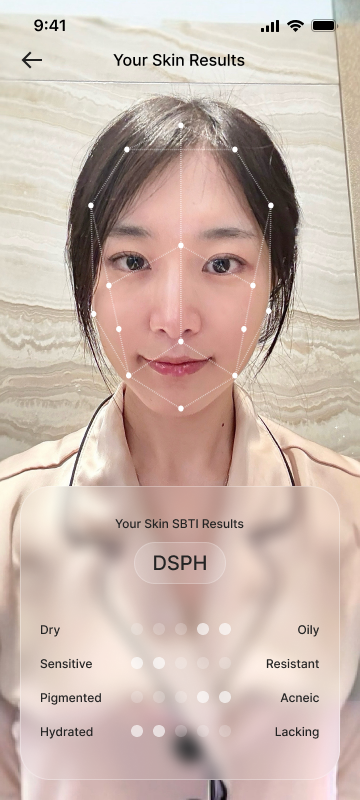
SBTI Result Card
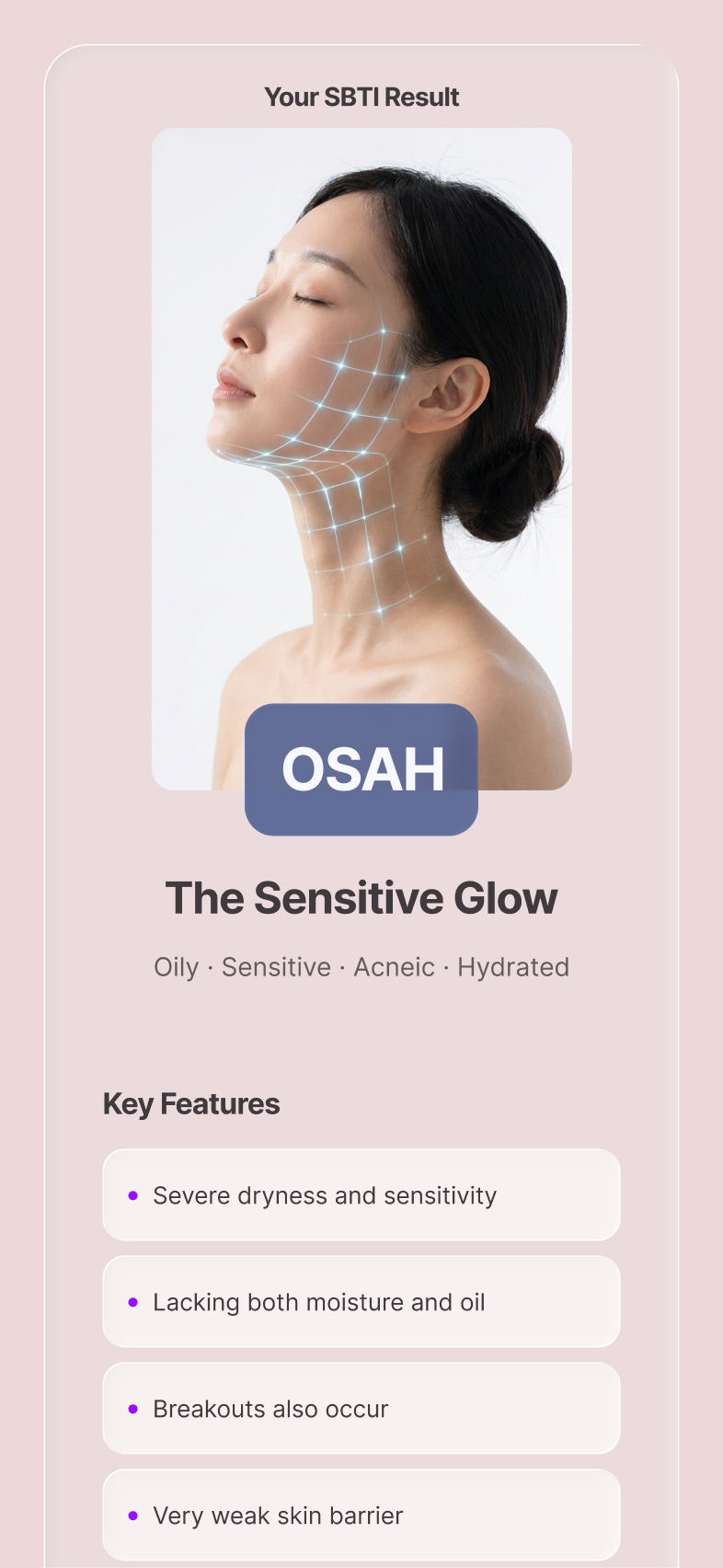
SBTI Result Card
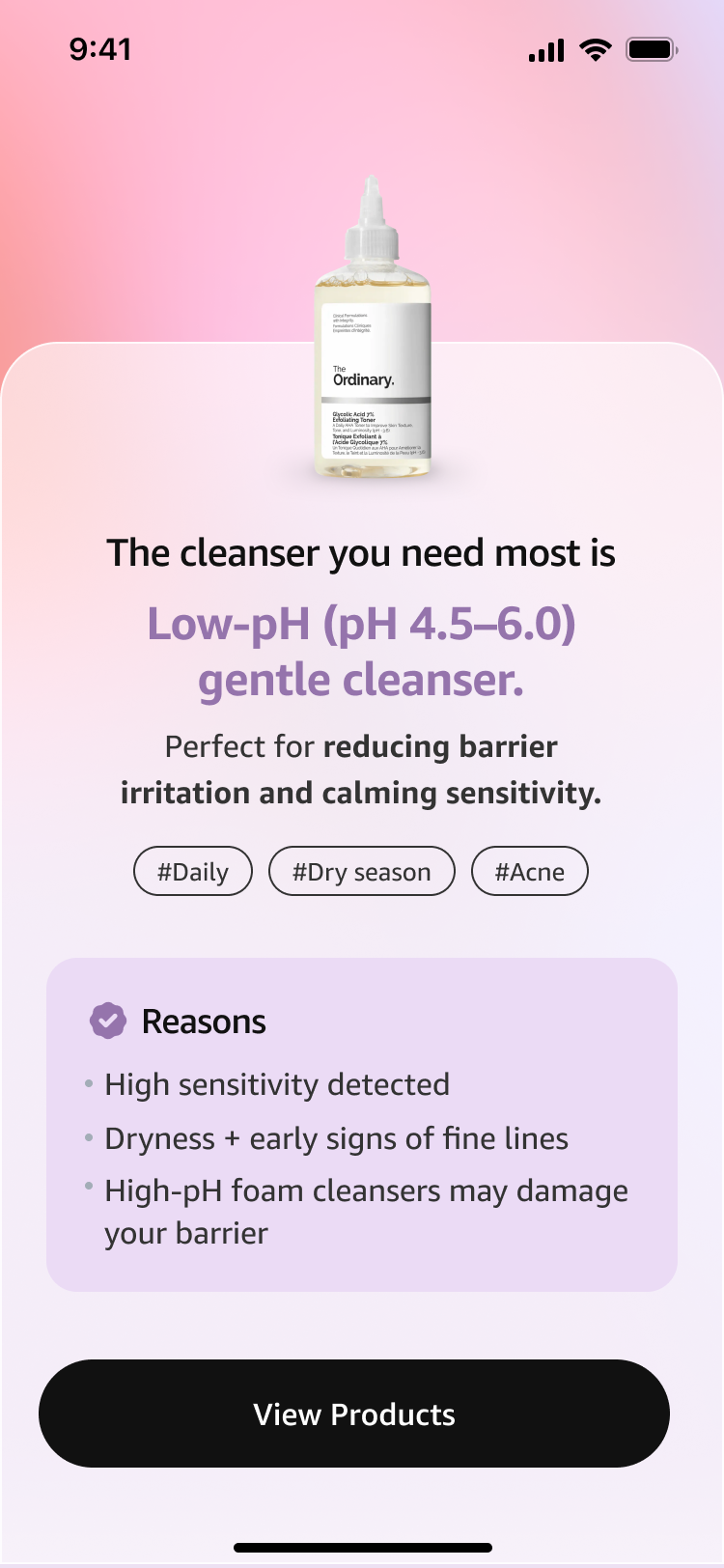
Recommended for my type
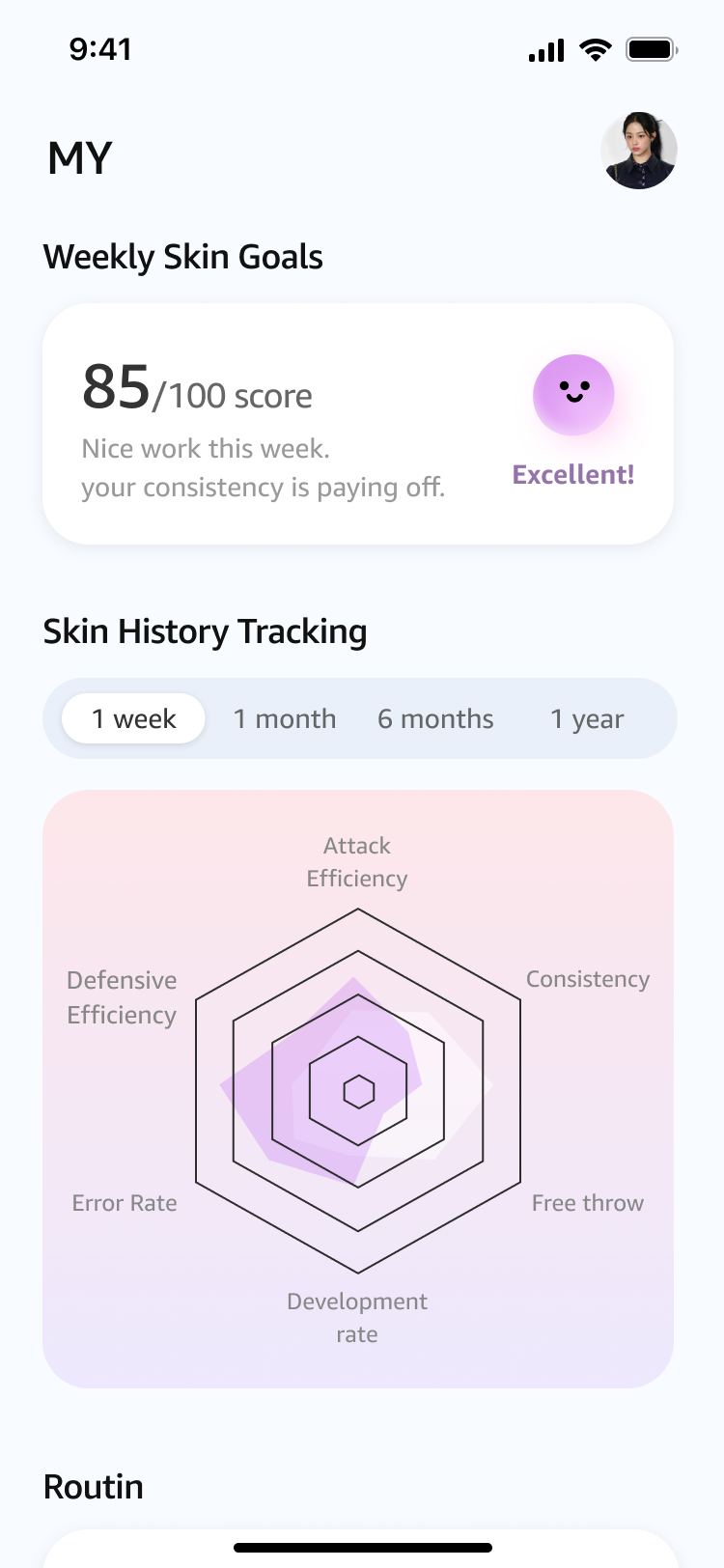
Skin Type Analysis
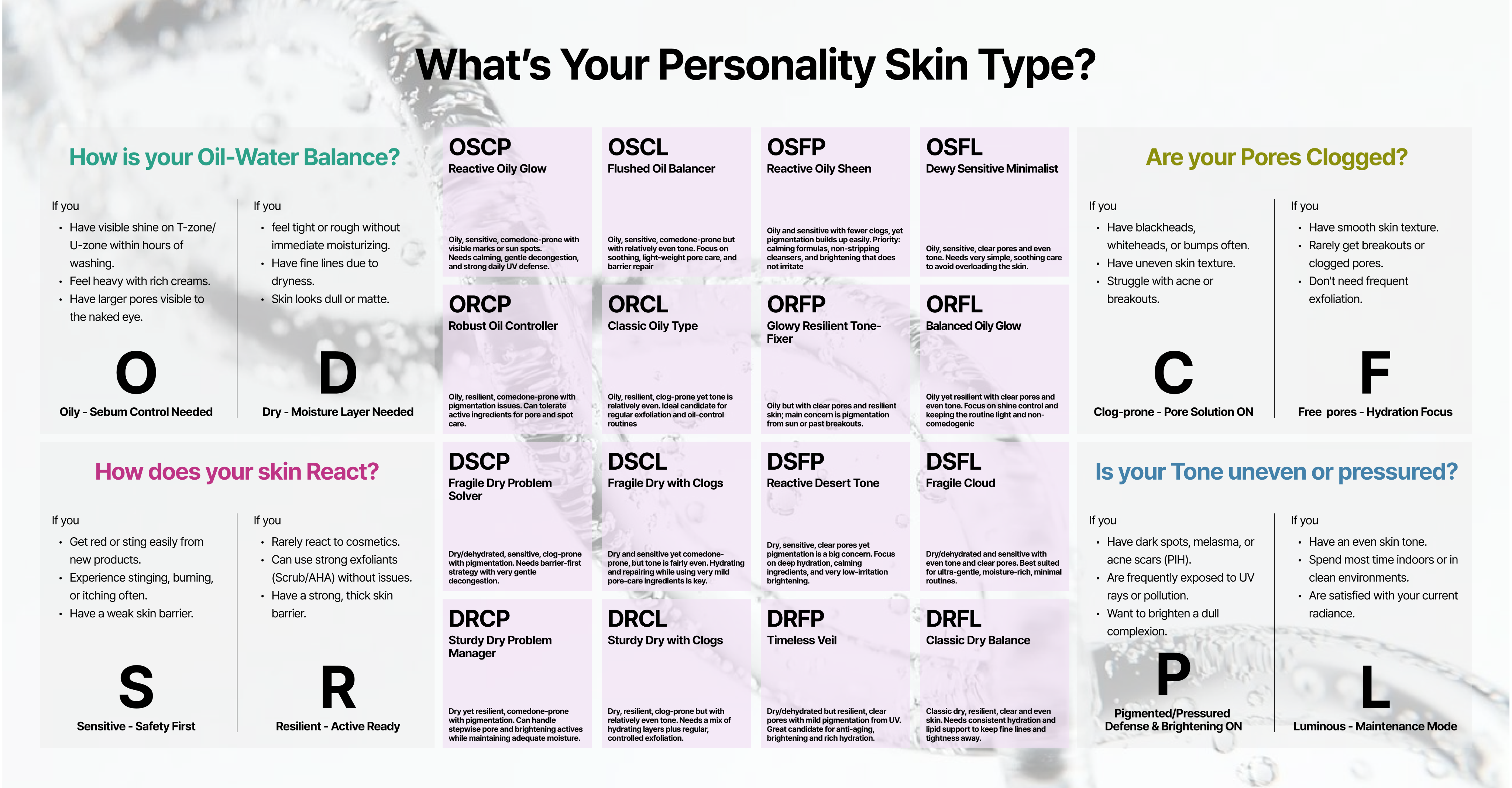
Skin-MBTI poster
Just as the periodic table organizes chemical elements, the SBTI Matrix categorizes the infinite complexity of skin into 16 distinct archetypes. By displaying all types in a structured grid, users can instantly locate their position within the spectrum and understand how they relate to other types
Phase 3. Precision Solution: The Action Loop
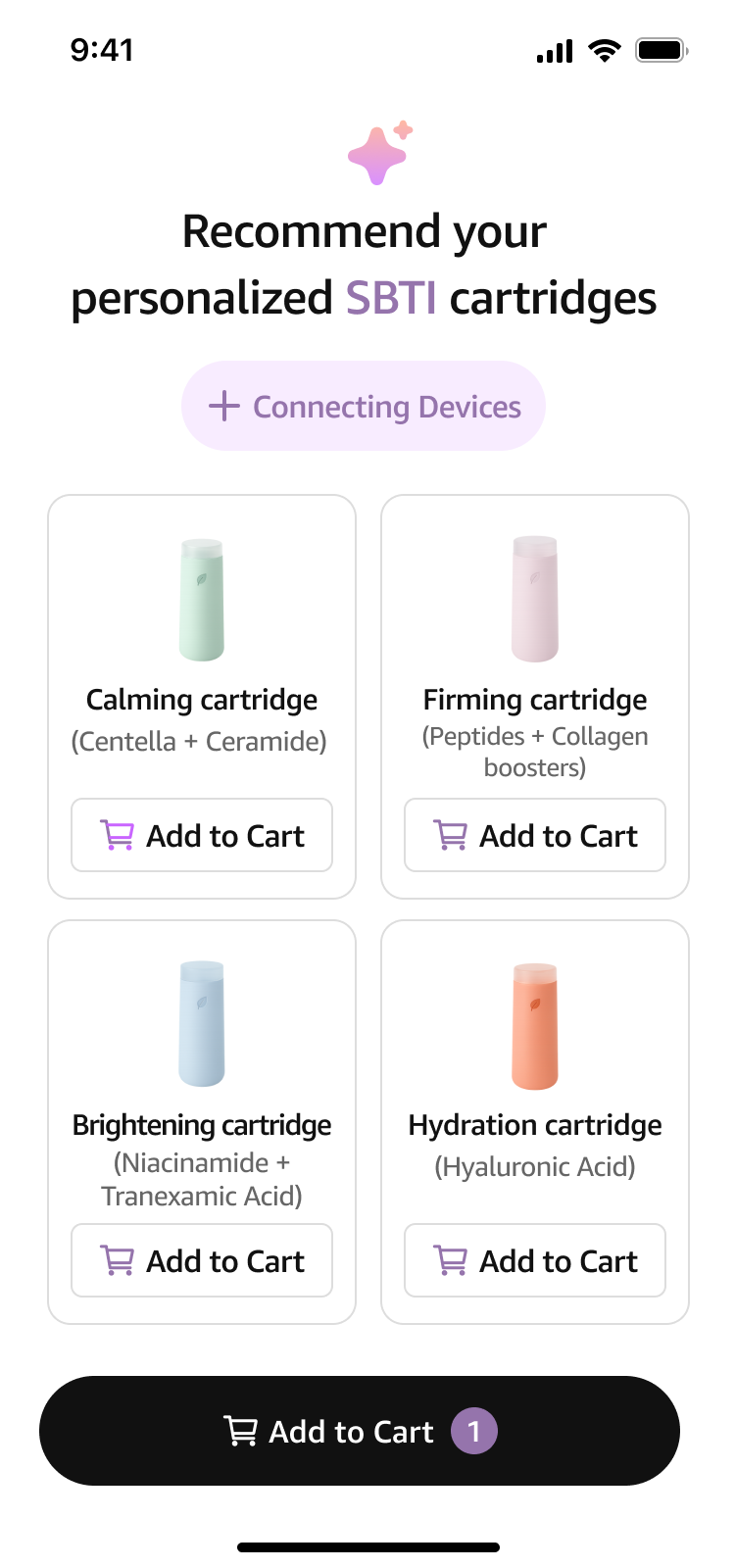
Customized Cartridge
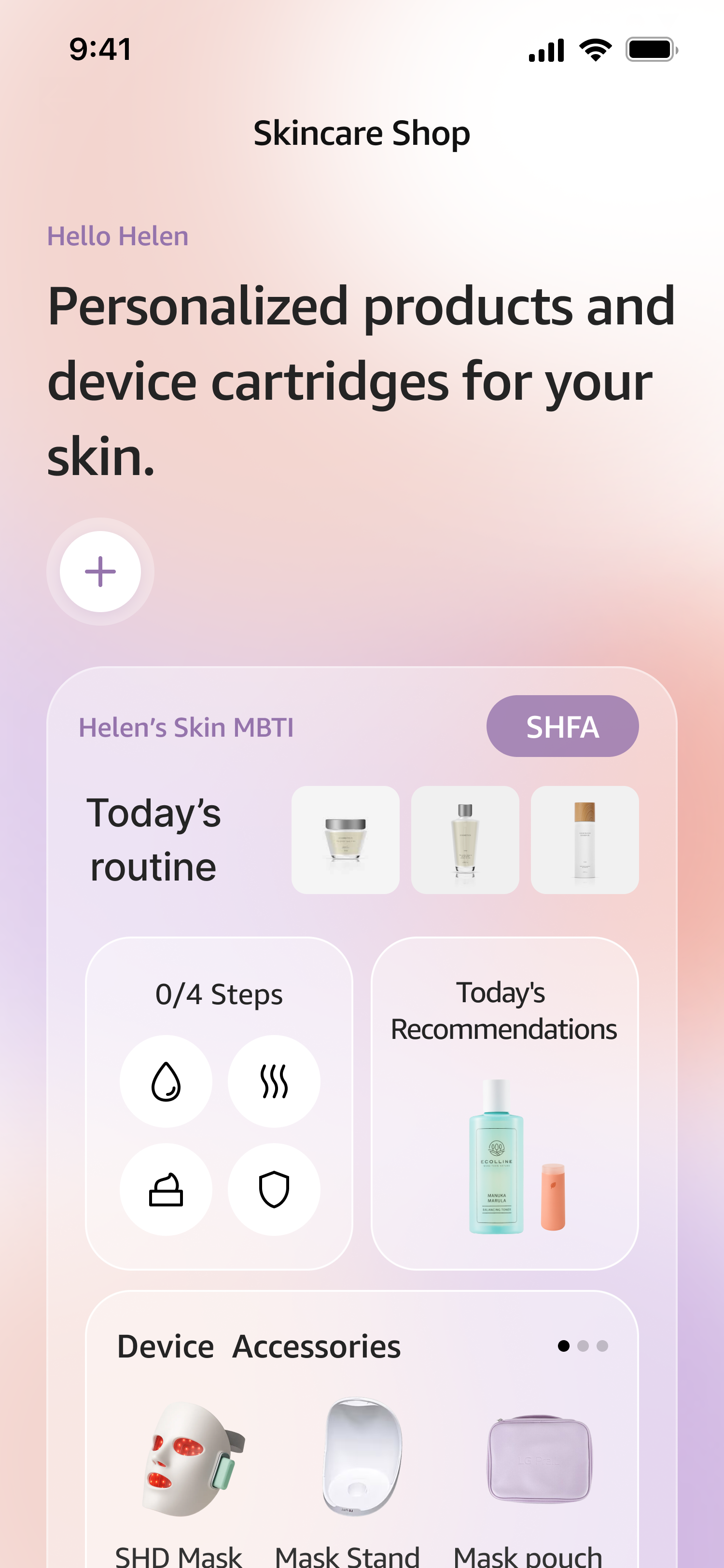
Skin Care Shop
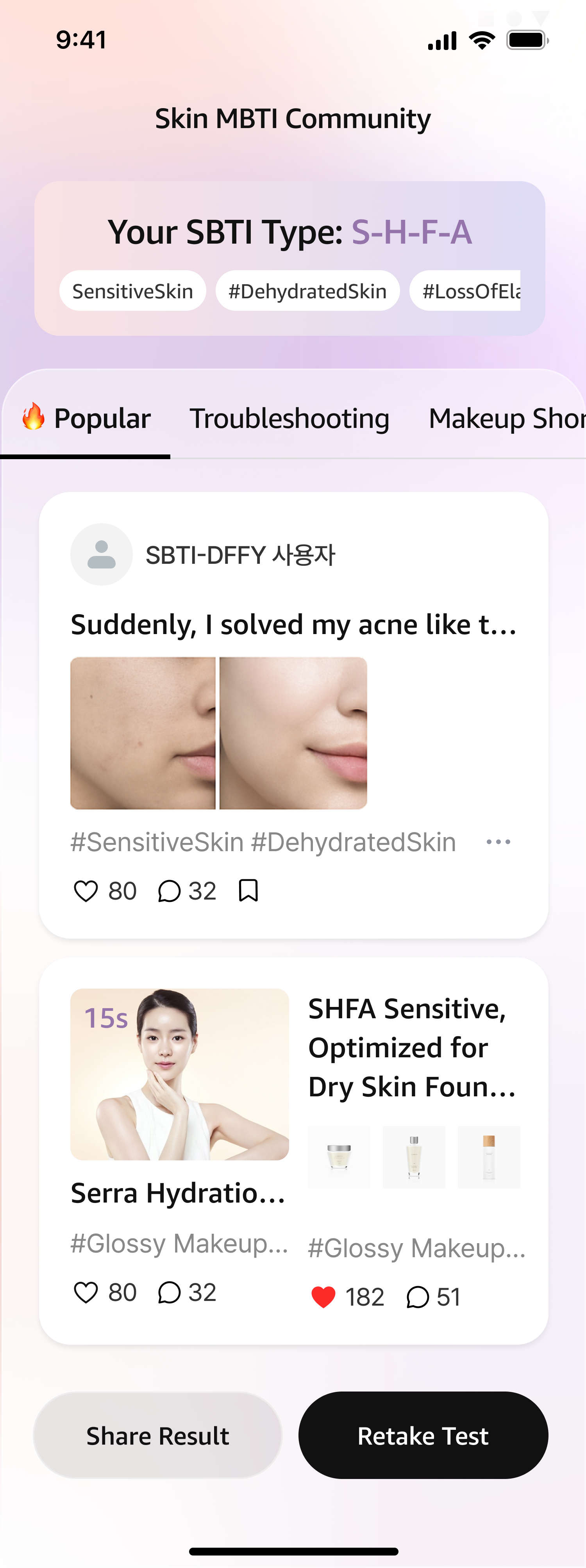
S type Community
Chemistry Matched to Data
The app recommends a specific 'Ampoule Cartridge' tailored to the SBTI result (e.g., Tea Tree + Hyaluronic Acid for Type O-S-A-L). It eliminates the "Trial & Error" of choosing ingredients manually.
Seamless O2O Care
When the cartridge is loaded into the device, the app automatically syncs via Bluetooth to set the optimal LED wavelength and absorption depth. This completes the journey from digital diagnosis to physical care.
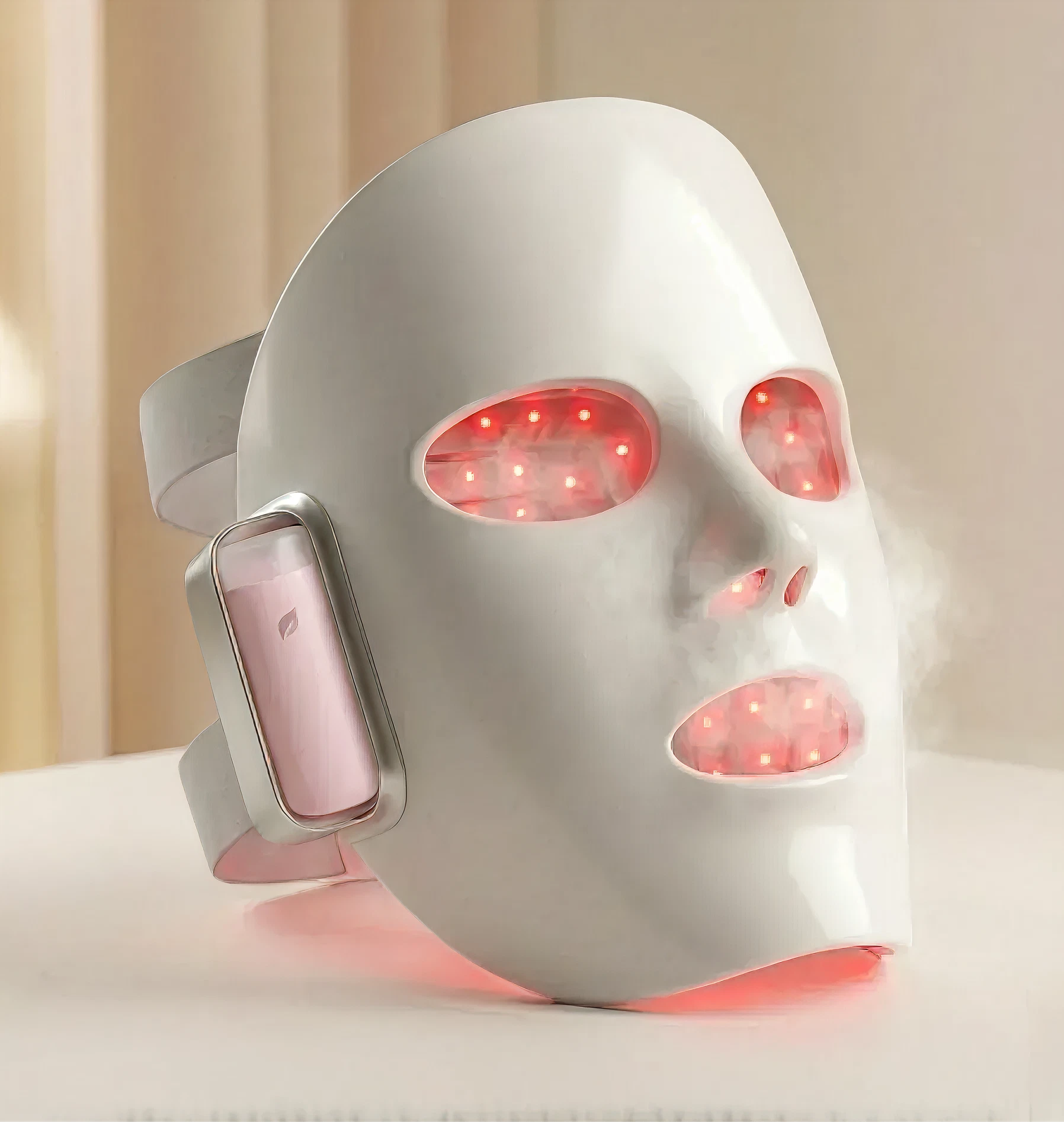
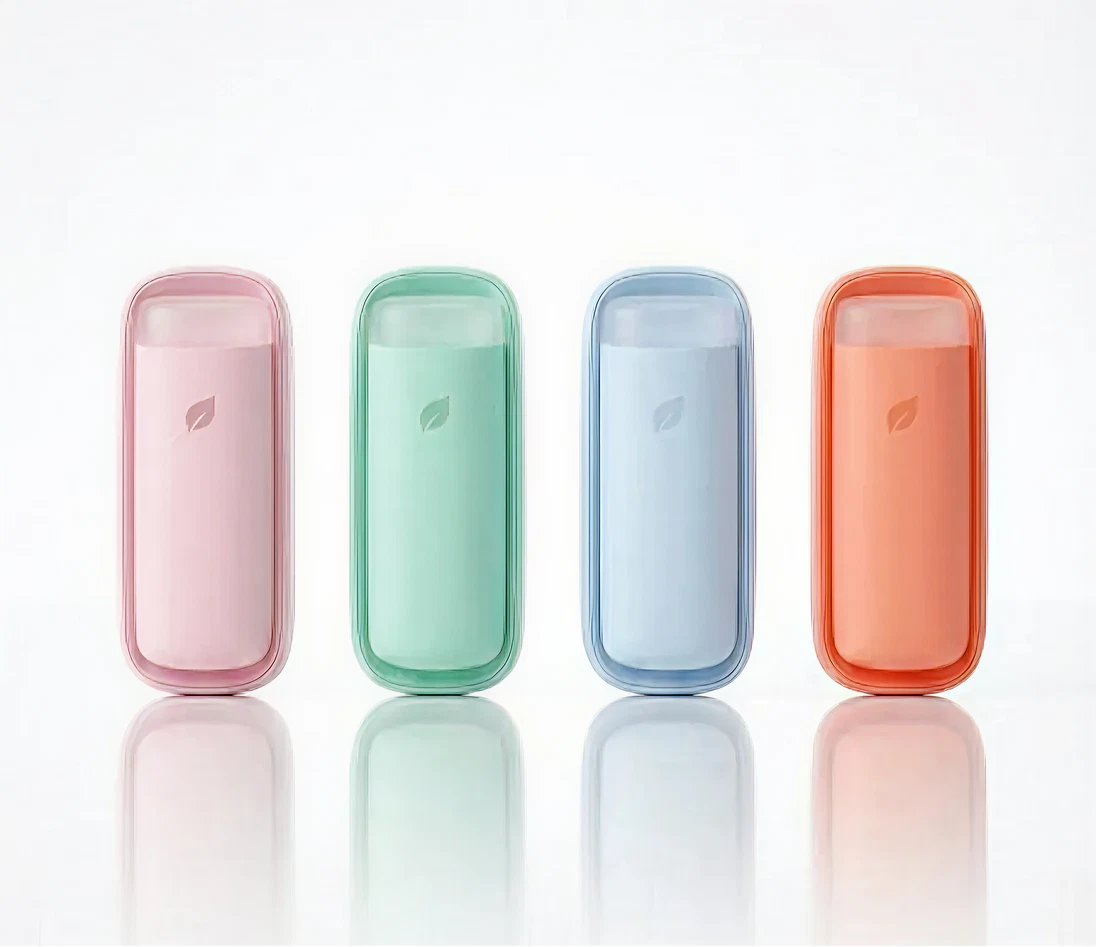
IoT Smart Bio-Mask
The solution is completed physically. When the cartridge is inserted into the Smart Bio-Mask, the device automatically syncs via Bluetooth. It optimizes the Mist Injection Pressure and LED Wavelengths to maximize absorption depth, ensuring the formula reaches the target layer effectively.
Algorithm-Derived Cartridge
Based on the unique SBTI code (e.g., OSCP), the app prescribes a Customized Ampoule Cartridge. By combining specific active ingredients—like Tea Tree for 'C' (Congestion) and Ceramides for 'S' (Sensitivity)—we eliminate the trial-and-error of skincare, delivering the exact chemical formula your skin demands
Designer's Takeaway

Humanizing Data
Through this project, I learned that data creates the strongest bond when it becomes an 'Identity'. Reframing cold medical metrics into a warm, playful 'SBTI' system taught me that the role of a designer is to translate complex technology into a human-centric language.
